BPM and Key Finder Online
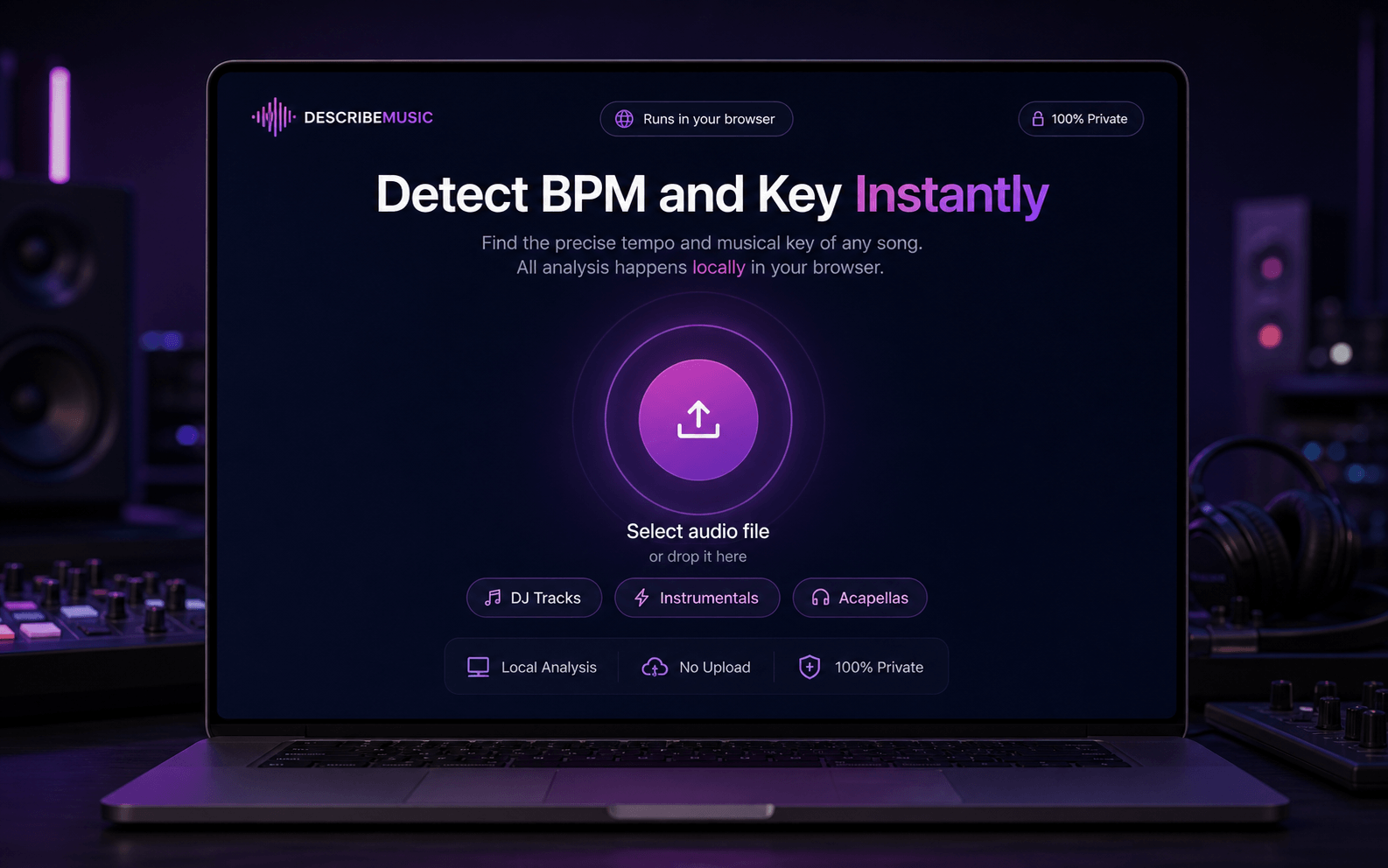
Analyze any track privately in your browser. Get BPM, musical key, Camelot code, and compatible keys in seconds.
Select audio file
or drop it here
Analyze any track privately in your browser. Get BPM, musical key, Camelot code, and compatible keys in seconds.
Select audio file
or drop it here
Free Online BPM and Key Finder for Songs
Use this BPM and Key Finder online to estimate song tempo, musical key, Camelot key, and compatible mixing keys without compromising the privacy of your unreleased tracks.
Private Song Key Finder in Your Browser
Drop a track into the BPM and Key Finder and your browser handles the audio decoding locally. The song key finder and tempo scan start from your device, so unreleased mixes, DJ edits, and stems stay under your control.
Read BPM, Key, and Camelot at a Glance
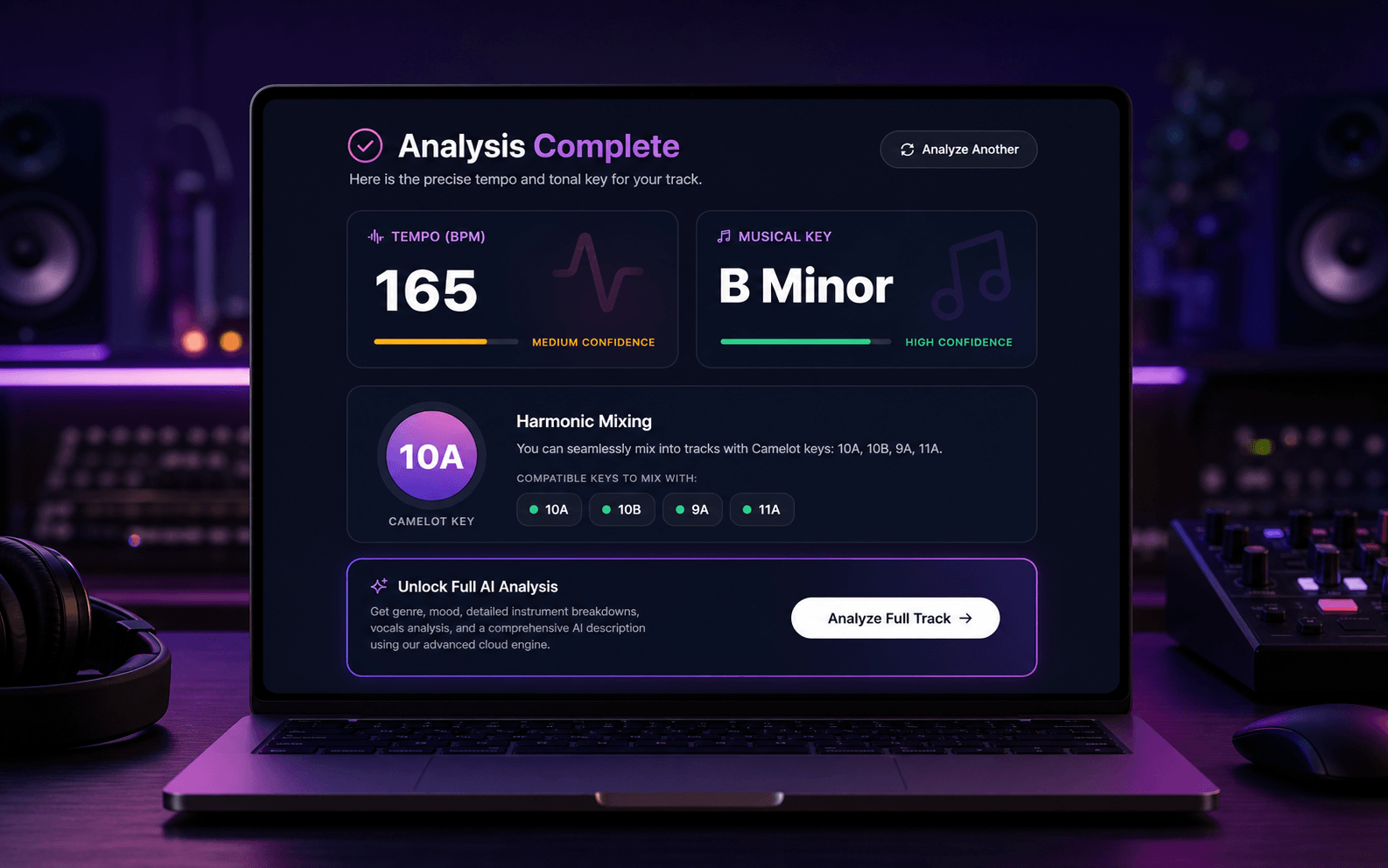
The result dashboard highlights song BPM, musical key, confidence, Camelot code, and compatible keys. It gives DJs and producers the essential information for harmonic mixing without digging through a full AI report.
Automatic Tempo Detector for Audio Files
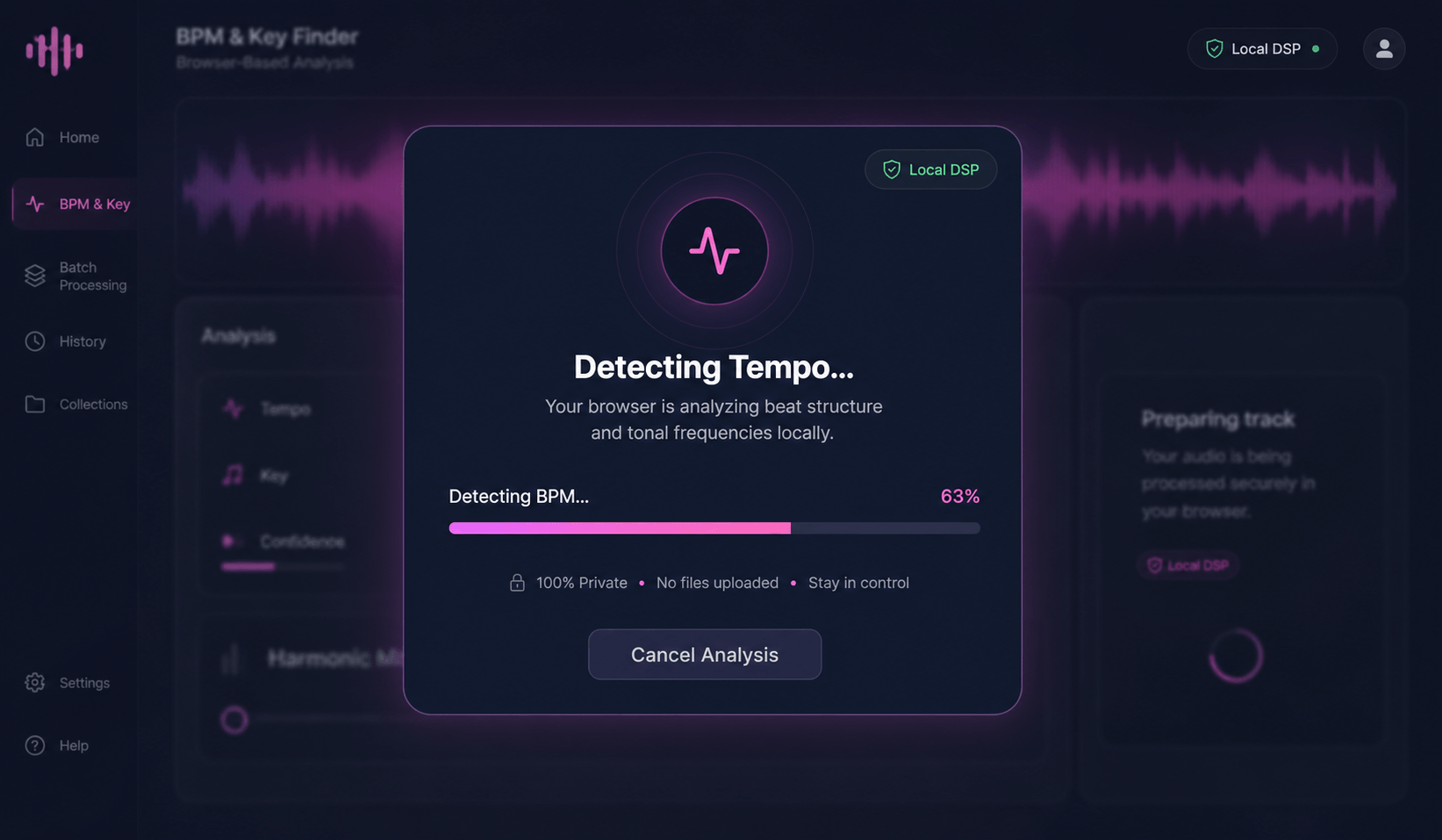
Instead of asking you to tap along manually, the browser analyzes beat structure and tonal frequency data from the audio file itself. Use the result for BPM detection, key detection, and setlist compatibility checks.
Understand Your BPM, Song Key, and Camelot Results
Use one analysis to prepare timing and harmony together. The estimates help you start a session, match a sample, or audition a DJ transition.
BPM and the main pulse
Use beats per minute as a working tempo for a DAW session, practice click, or beat grid. A 70 BPM groove may also be counted at 140 BPM; choose the pulse that matches the section you will use.
Musical key, mode, and confidence
Read the estimated tonal center and major or minor mode before choosing chords, transposing a vocal, or matching a pitched sample. Confidence is a guide, not a guarantee.
Camelot and compatible keys
Use the Camelot code and compatible-key suggestions to shortlist harmonic transitions. Audition them: phrasing, bass movement, and energy still matter.
Who uses a BPM and Key Finder?
Plan Harmonic Transitions
Sort tracks by BPM and Camelot Key before a set. Use compatible keys to keep energy changes intentional and avoid harmonic clashes when building a DJ playlist.
Prep Remixes Faster
Check the tempo and key of vocals, loops, or instrumentals before moving into your DAW. Start with cleaner warp, pitch, and arrangement decisions.
Choose Tracks by Tempo and Key
Singers can identify the key of a backing track before practice or recording. Dancers and choreographers can check song BPM quickly when choosing music for a routine.
Make the result useful
Check the Passage You Plan to Use
Automatic detection gives a practical starting point. Listen to the relevant section before committing a beat grid, pitch shift, or harmonic transition.
Half-time, double-time, and changing tempo
Some grooves suggest two related speeds. Live timing, rubato, tempo changes, and DJ transitions may not have one fixed BPM, so verify the specific passage in your DAW or by ear.
Modulations and sparse tonal material
A bridge or chorus may change key. The result estimates an overall tonal center rather than a bar-by-bar harmonic map. Percussion-only files, a cappellas, and heavily processed sounds can offer fewer pitch clues.
Private audio analysis
The file is decoded and analyzed in your browser. Your unreleased tracks, demos, stems, and edits are not uploaded to a separate analysis server for this BPM and key workflow.
How to Use the BPM and Key Finder Online?
Use the browser-based BPM and Key Finder to analyze any song, instrumental, vocal, or loop without installing software.
Drop Your Track
Whether it is MP3, WAV, FLAC, or M4A, drag it into the BPM and Key Finder interface.
Run the Tempo and Key Detector
Your browser decodes the audio locally and estimates the track tempo, tonal center, and likely musical key.
Get BPM, Key, and Camelot Key
View the detected BPM, musical key, Camelot key, and compatible keys for harmonic mixing.
Frequently Asked Questions
How does the BPM and Key Finder work?
Can I use this as a song key finder or music key detector?
Are BPM finder, song key and BPM finder, and BPM key finder the same kind of tool?
Is my audio uploaded to a server?
What is the Camelot Key?
BPM detector vs BPM tapper: What is the difference?
Why is the detected BPM half or double the tempo I hear?
Can this key finder analyze vocals, samples, and songs that change key?
How accurate are the BPM and key estimates?
Related music tools
Continue with the Right Music Tool
Use manual tap tempo when you cannot select an audio file, or continue with identification and music analysis for a different task.
BPM Tapper / Tap Tempo
Tap the pulse of a stream, vinyl record, or live performance when no audio file is available.
Audio Finder
Identify a song from a recording when you need the title and artist.
Similar Song Finder
Find other tracks to audition after checking the tempo and key of your reference.